Blog Details
HomeBlog Details

 Call us +91 9437056068
 Mail support@allexportimportofuniverse.com


HomeBlog Details
Oct 16 2026
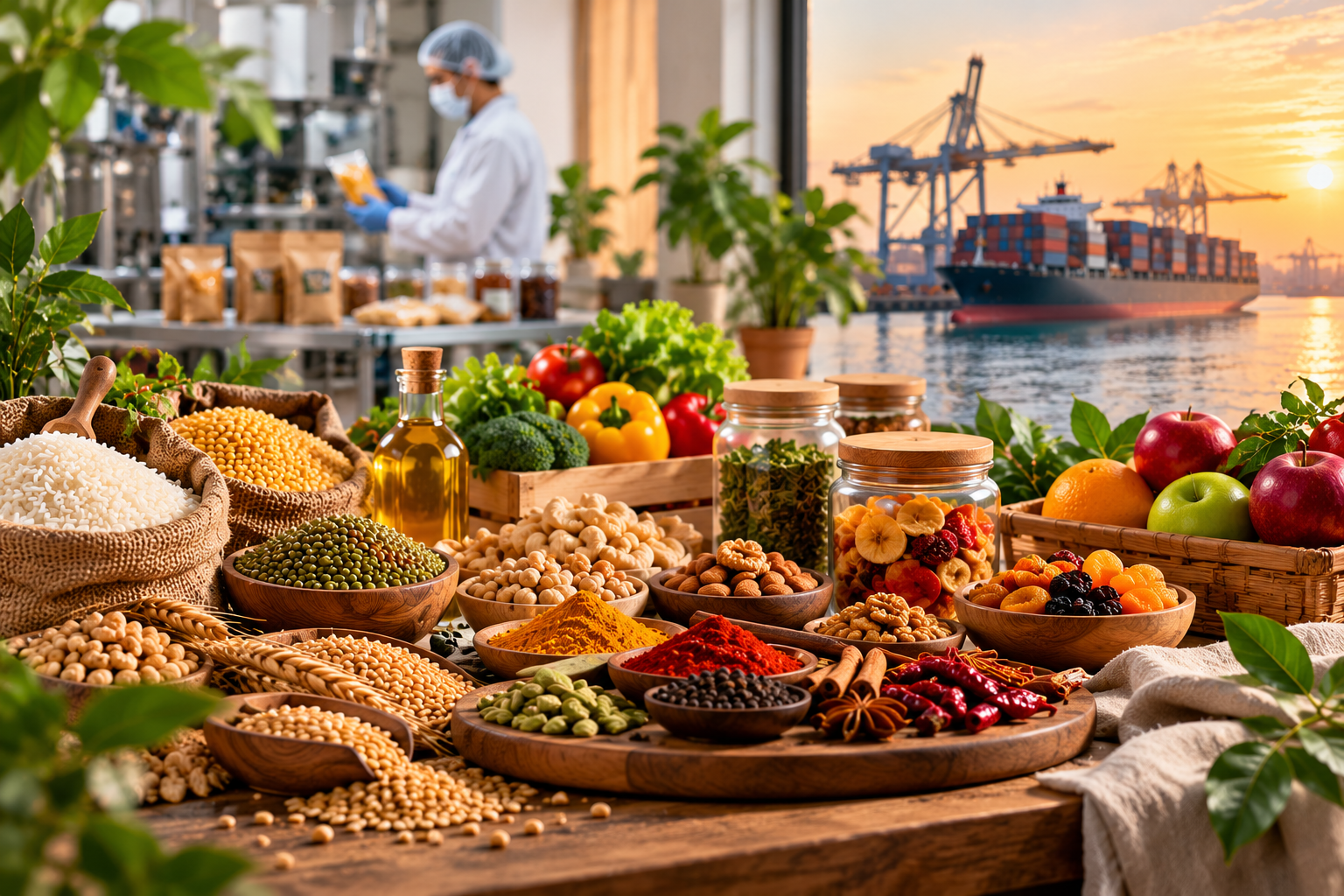
Food connects people, communities, and markets around the world. From grains and pulses to spices, dehydrated foods, fruits, and vegetables, food products move through complex supply chains before reaching businesses and consumers.
As food trade expands across domestic and international markets, product quality becomes an important consideration for buyers, suppliers, distributors, and food-processing businesses.
Food quality involves several factors, including freshness, appearance, consistency, packaging, storage, and suitability for the intended use. The specific requirements depend on the product and the market in which it will be sold.
For example, grains and pulses may require attention to moisture levels, cleanliness, and grading, while spices may be assessed for colour, aroma, purity, and product specifications. Processed and dehydrated foods may have additional packaging and storage requirements.
Understanding these differences helps buyers select products that meet their business needs.
Packaging and storage help protect food products during handling, transportation, and distribution. Suitable packaging can reduce exposure to moisture, contamination, physical damage, and other conditions that may affect product quality.
Storage requirements vary by product. Some products require cool, dry conditions, while fresh fruits and vegetables may need temperature-controlled handling and faster transportation.
Businesses should confirm the appropriate packaging, storage, and transportation arrangements before finalising an order.
For wholesalers, distributors, retailers, and food manufacturers, consistency is an important part of supplier selection.
Buyers often look for products that match agreed specifications across orders. Clear product descriptions, defined quality requirements, appropriate inspection procedures, and effective communication can help establish realistic expectations between buyers and suppliers.
Consistency also supports better inventory planning and helps businesses manage their own customer requirements.
Food products traded across borders may be subject to regulations relating to food safety, labelling, packaging, documentation, and import procedures.
These requirements vary according to the product and destination country. Businesses should verify applicable regulations and ensure that the necessary documentation is in place before shipping.
Buyers and suppliers should also discuss quantities, delivery schedules, payment terms, and responsibilities for transportation and customs procedures.
All Export Import of Universe (AEIOU) is an India-based trading company with food-related product categories listed on its website, including grains, cereals, pulses, spices, dehydrated products, fruits, and vegetables.
The company aims to develop business relationships by understanding customer requirements and exploring opportunities across its product portfolio.
Businesses interested in food products can begin by identifying their required product, quantity, specifications, packaging preferences, and destination market.
Choosing suitable food products involves more than comparing prices. Buyers should consider product specifications, quality expectations, packaging, storage, transportation, applicable regulations, and supplier communication.
Taking the time to clarify these requirements can help businesses make informed sourcing decisions and build productive trading relationships.
Are you exploring food products for wholesale, distribution, processing, or other business requirements?
Visit All Export Import of Universe (AEIOU) to explore the company's listed product categories and discuss your requirements.
Website: https://allexportimportofuniverse.com/
Contact the company to enquire about product availability, specifications, and potential business opportunities.